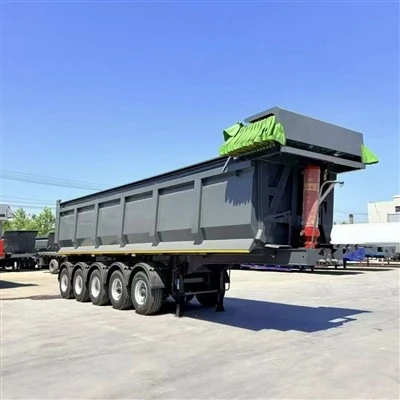
Dump trailers are core transportation equipment for infrastructure, mining and municipal engineering. Material abrasion directly affects vehicle service life, driving stability and maintenance costs. Cargo body damage mainly stems from three overlapping forms of wear: abrasive wear, impact fatigue and chemical corrosion.
Materials vary greatly in physical and chemical properties, resulting in vastly different degrees of damage to the cargo body. Hard ores and crushed stone deliver the strongest impact and abrasion; prolonged transportation scratches the body panels and may even cause structural cracks in severe cases. Humid corrosive materials such as saline soil and industrial chemical residues trigger electrochemical pitting corrosion on metals and accelerate frame deterioration. Construction waste with irregular particle sizes and inconsistent hardness tends to cause uneven localized wear on the cargo body. In contrast, soft soil and fine sand only produce mild uniform friction and barely lead to substantial damage.
Ranking of wear intensity from highest to lowest: hard ores > corrosive materials > construction waste > soft earth.
Reasonable optimized design and routine maintenance can effectively reduce body wear and extend the service life of dump trailers.
In terms of material selection, wear-resistant steel plates are the optimal option for hauling hard mineral materials, while vehicles carrying corrosive loads must be equipped with anti-corrosion coatings. Ordinary carbon steel is fully competent for conventional earthwork transportation and helps control equipment costs.
For structural design, optimizing the transition of cargo compartment corners, installing wear-resistant liners on vulnerable parts and adding bottom drainage structures can remarkably mitigate impact damage, localized friction and chemical corrosion. Meanwhile, daily maintenance including timely cleaning of residual cargo, regular inspection of vehicle body structures and periodic rust prevention upkeep can slow down body aging and abrasion.
In conclusion, the physical and chemical properties of cargo directly determine the wear characteristics of dump trailer bodies. Selecting appropriate materials, carrying out structural modifications and formulating scientific maintenance plans for different cargo types can minimize wear to the greatest extent, ensure safe operation and cut down long-term equipment maintenance expenses.