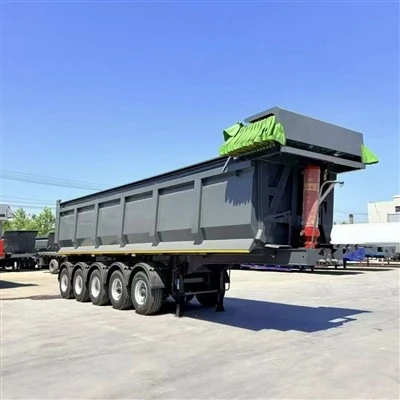
In terms of performance and safety, rear tipper trailers can carry moderate loads yet suffer from poor stability during unloading, with a risk of tipping backward. Besides, they require less operating skill from workers. In contrast, side tipper trailers bear heavier cargo and maintain superior stability even on uneven ground. However, they demand more experienced drivers and regular maintenance for smooth operation. The two types fit distinct working scenarios: rear tippers are ideal for small construction sites, waste disposal, agriculture and short-distance transport, while side tippers are more suitable for large construction projects, mining, ports and all heavy-load haulage operations.
In terms of maintenance and costs, rear tipper trailers feature a simple structure with lower purchase, operation and maintenance expenses. Although side tipper trailers require higher upfront investment and operating costs, their higher efficiency can offset these extra expenses in large-scale projects.In summary, rear tipper trailers are the most cost-effective option if you transport moderate volumes of cargo with limited lateral space. Side tipper trailers are a better fit when you need to haul heavy loads, unload materials rapidly, or work in narrow and rugged areas. Ultimately, your choice of trailer depends on your budget, the weight of cargo to be transported, and the actual conditions at your job site.