


Selecting the right boat trailer for a large yacht is a critical decision that requires careful consideration of various factors. As a seasoned boat trailer supplier, I understand the complexities involved in this process and am here to guide you through the essential steps to ensure you make an informed choice.
Understanding Your Yacht's Specifications
The first step in choosing a boat trailer is to have a thorough understanding of your yacht's specifications. This includes the yacht's length, width, height, and weight. The length of the yacht will determine the minimum length of the trailer needed to support it properly. A trailer that is too short can cause the yacht to overhang, which can be dangerous during transportation.
Width is another crucial factor. The trailer should be wide enough to provide stable support for the yacht. However, it should also comply with local road regulations regarding maximum trailer width. Height is important as well, especially if you plan to transport the yacht through areas with low clearances, such as under bridges or through tunnels.
The weight of the yacht is perhaps the most critical specification. You need to know the dry weight of the yacht, which is its weight without any fuel, water, or equipment on board. Additionally, consider the weight of any additional items you may carry on the yacht during transportation, such as spare parts, life jackets, and fuel. The trailer you choose must have a sufficient weight capacity to handle the total weight of the yacht and its contents.
Types of Boat Trailers
There are several types of boat trailers available, each designed to meet different needs and yacht specifications.
Bunk Trailers
Bunk trailers are one of the most common types of boat trailers. They feature a series of wooden or metal bunks that support the yacht along its hull. Bunk trailers are suitable for a wide range of yacht sizes and shapes. They provide good support for the hull and are relatively easy to load and unload. However, they may not be the best option for yachts with a deep V-shaped hull, as the bunks may not provide adequate support in the center.
Roller Trailers
Roller trailers use a series of rollers to support the yacht. These trailers are ideal for yachts with a smooth hull surface, as the rollers allow for easy loading and unloading. Roller trailers are also more forgiving when it comes to hull shape, as they can conform to the contours of the hull better than bunk trailers. However, they may require more maintenance, as the rollers can wear out over time.
Pontoon Trailers
Pontoon trailers are specifically designed for pontoon boats. They feature a flat platform with adjustable crossbars to accommodate different pontoon sizes. Pontoon trailers provide stable support for pontoon boats and are easy to load and unload. They are also suitable for transporting pontoon boats with large deck areas.
Trailer Construction and Materials
The construction and materials used in the trailer play a significant role in its durability and performance.
Frame Material
The frame of the trailer is typically made of steel or aluminum. Steel frames are strong and durable, but they are also heavier and more prone to rust. Aluminum frames, on the other hand, are lighter and more resistant to corrosion. They are a good choice for trailers that will be used in saltwater environments or areas with high humidity.
Axles and Suspension
The axles and suspension system of the trailer are responsible for supporting the weight of the yacht and providing a smooth ride. Most boat trailers use leaf spring suspension, which is a simple and reliable system. However, some trailers may feature more advanced suspension systems, such as torsion axles, which provide a smoother ride and better handling.
Brakes
Brakes are an essential safety feature on any boat trailer. There are two main types of trailer brakes: surge brakes and electric brakes. Surge brakes are activated by the forward motion of the towing vehicle when it slows down. They are a simple and reliable system, but they may not be as effective as electric brakes. Electric brakes are controlled by the towing vehicle's brake system and provide more precise braking control. They are recommended for larger yachts and trailers.
Additional Features
In addition to the basic features, there are several additional features that you may want to consider when choosing a boat trailer.
Winch
A winch is a useful tool for loading and unloading the yacht onto the trailer. It allows you to easily pull the yacht onto the trailer using a cable or strap. There are two main types of winches: manual winches and electric winches. Manual winches are operated by hand and are suitable for smaller yachts. Electric winches are powered by the towing vehicle's battery and provide more power and convenience, especially for larger yachts.
Lights
Proper lighting is essential for safe trailer operation, especially at night or in low-light conditions. Make sure the trailer is equipped with all the necessary lights, including brake lights, turn signals, and running lights. LED lights are a popular choice for boat trailers, as they are energy-efficient and long-lasting.

Adjustable Components
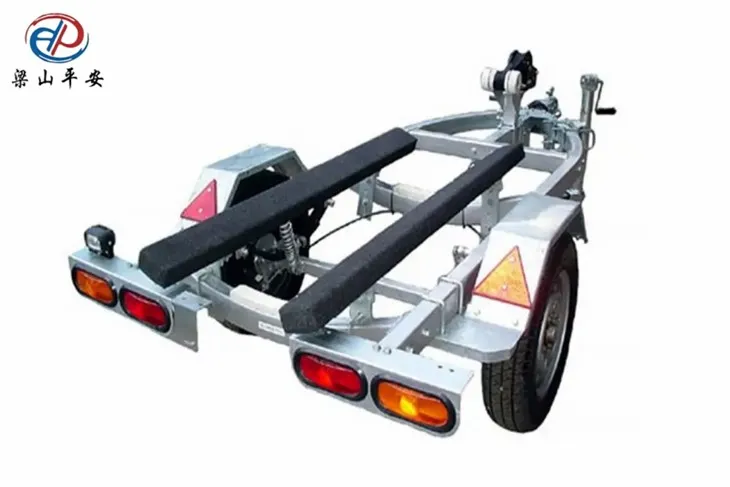
Some trailers feature adjustable components, such as bunks, rollers, and crossbars. These components allow you to customize the trailer to fit your yacht's specific dimensions and shape. Adjustable components can be especially useful if you plan to use the trailer for different yachts in the future.
Compatibility with Your Towing Vehicle
Before purchasing a boat trailer, it is important to ensure that it is compatible with your towing vehicle. Consider the following factors:
Towing Capacity
The towing capacity of your vehicle is the maximum weight it can safely tow. Make sure the total weight of the yacht, trailer, and any additional cargo does not exceed the towing capacity of your vehicle. Exceeding the towing capacity can put excessive strain on your vehicle's engine, transmission, and brakes, and can also be dangerous on the road.
Hitch Type
The hitch is the connection between the trailer and the towing vehicle. There are several types of hitches available, including ball hitches, gooseneck hitches, and fifth-wheel hitches. Make sure the trailer you choose is compatible with the hitch type on your vehicle.
Electrical Connection
The trailer's lights and brakes need to be connected to the towing vehicle's electrical system. Make sure the trailer has the appropriate electrical connector for your vehicle. Most trailers use a standard 4-pin, 5-pin, 6-pin, or 7-pin connector.
Cost and Budget
The cost of a boat trailer can vary widely depending on its size, type, features, and brand. When setting your budget, consider not only the initial purchase price of the trailer but also the cost of maintenance, insurance, and any additional accessories you may need.
It is important to remember that a high-quality trailer may cost more upfront, but it can save you money in the long run by providing better performance, durability, and safety. Look for a trailer that offers a good balance between cost and features, and that meets your specific needs and requirements.
Conclusion
Choosing the right boat trailer for a large yacht is a complex process that requires careful consideration of many factors. By understanding your yacht's specifications, the different types of trailers available, the construction and materials used, the additional features, the compatibility with your towing vehicle, and your budget, you can make an informed decision and select a trailer that will provide safe and reliable transportation for your yacht.
If you are in the market for a boat trailer, I invite you to explore our wide range of options. We offer high-quality trailers that are designed to meet the needs of large yachts. Our trailers are built with the latest technology and materials, and come with a variety of features and accessories to ensure your yacht is transported safely and securely.
For more information on our products, including Made Kayak Transport Trailers, please feel free to contact us. We are here to assist you in finding the perfect boat trailer for your needs. Whether you have questions about our trailers, need help with installation, or want to discuss your specific requirements, our team of experts is ready to help.
References
- BoatUS Foundation. (n.d.). Choosing a Boat Trailer. Retrieved from https://boatus.org/boat-ed/course/chapter/choosing-a-boat-trailer/
- Trailer Life. (n.d.). How to Choose the Right Boat Trailer. Retrieved from https://www.trailerlife.com/how-to-choose-the-right-boat-trailer/
- The Hull Truth. (n.d.). Selecting the Right Boat Trailer. Retrieved from https://www.thehulltruth.com/boating-topics/562243-selecting-right-boat-trailer.html


